미국 워싱턴 D.C.에 본부를 둔 대표적인 비영리 싱크탱크인 경제정책연구센터(CEPR, Center for Economic and Policy Research)는 25.9.11일(목), 한국과 미국의 관세 협상에 대한 논평을 발표했다.
아래는 논평 전문이다.
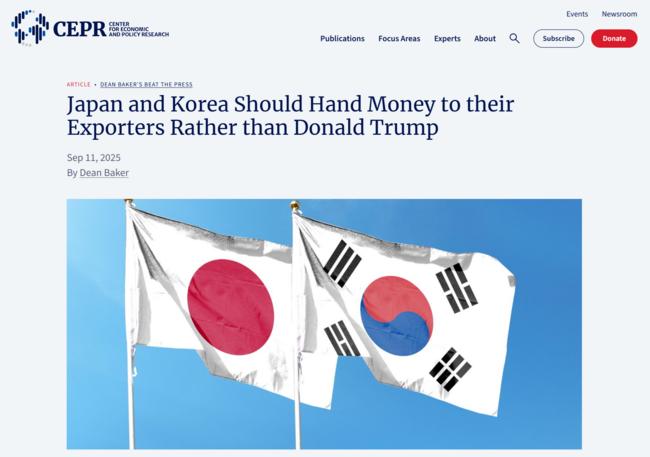 CERP 논평 (이미지=CERP 홈페이지)
「일본과 한국, 트럼프에게 돈 줄 바에야 수출 기업을 돕는 게 낫다」
2025년 9월 11일
딘 베이커(Dean Baker)
도널드 트럼프는 일본과 한국과의 무역 협상을 자랑해 왔습니다. 그들의 수입품에 대한 세금을 25%에서 15%로 낮춰주는 대가로, 일본은 5,500억 달러, 한국은 3,500억 달러를 그가 원하는 대로 투자할 수 있도록 "줄 것"이라는 내용입니다. 이 약속들의 정확한 성격은 아직 불분명하지만, 만약 트럼프가 묘사하는 것과 조금이라도 비슷하다면, 이들 국가는 그 거래를 받아들이는 것이 터무니없을 정도로 어리석은 짓이 될 것입니다.
간단한 계산만으로도 이 점은 명확해집니다. 작년 일본은 미국에 1,480억 달러의 상품을 수출했습니다. 15%의 세금이 수출을 5% 감소시킨다고 가정해 봅시다. 이는 수출액을 약 1,400억 달러로 줄이는 것이며, 이는 일본 GDP의 3.5%에 해당합니다. (트럼프가 대부분의 수입품에 동시에 관세를 부과하고 있기 때문에, 특정 국가의 수출에 대한 관세가 미치는 영향에 대한 일반적인 계산은 그다지 유용하지 않습니다.)
추가로 10%포인트의 세금이 일본의 대미 수출을 10% 더 줄인다고 가정해 봅시다. 이는 140억 달러의 감소이며, 일본 GDP의 0.3%를 조금 넘는 수준입니다.
결과적으로 트럼프는 일본에게 연간 140억 달러의 수출을 보호하기 위해 5,500억 달러를 넘겨달라고 요구하는 것입니다. 이것은 전혀 좋은 거래처럼 들리지 않습니다.
하지만, 상황은 더 나빠집니다. 트럼프는 자신의 어떤 거래에도 구속받지 않는다고 생각합니다. 그는 내년에, 그 다음 해에, 또는 그의 세 번째 임기 중 어느 시점에라도 일본에게 쉽게 돌아와 더 많은 돈을 요구할 수 있습니다. 그의 사업 동료들이 뼈저리게 배웠듯이, 도널드 트럼프에게 거래는 아무 의미가 없습니다.
같은 계산을 한국에 적용해 봅시다. 한국은 작년에 미국에 1,320억 달러의 상품을 수출했으며, 이는 GDP의 약 7.3%에 해당합니다. 15%의 세금이 수출을 5% 감소시킨다면, 수출액은 1,250억 달러로 줄어들 것입니다. 트럼프의 25% 세금으로 인한 추가 10%의 감소는 125억 달러, 즉 GDP의 0.7%에 해당합니다. 트럼프는 이 125억 달러의 수출을 보호하기 위해 한국이 그에게 3,500억 달러를 지불할 것을 요구하고 있습니다.
어떤 국가도, 특히 도널드 트럼프와 같은 사람과 이런 종류의 거래를 체결하려는 이유를 이해하기 어렵습니다. 그들은 트럼프가 요구하는 금액의 20분의 1을 사용하여 수출 손실로 피해를 입은 노동자와 기업을 지원할 수 있으며 훨씬 더 나은 결과를 얻을 수 있습니다. 또한 트럼프가 생각해 낸 어떤 바보 같은 생각이나 우익 인플루언서가 제안하는 멍청한 짓 때문에 화를 낼까 봐 걱정할 필요도 없을 것입니다.
미국으로부터의 군사적 지원을 유지하기 위해 거래를 모색할 수도 있다는 주장이 있을 수 있습니다. 하지만 이는 훨씬 더 어리석은 전략이 될 것입니다. 이들 국가의 지도자들이 중국의 군사 행동으로부터 자신들을 보호하기 위해 트럼프에게 의지하는 것은 미친 짓이 될 것입니다. '미국 우선주의(America First)'라는 말을 그들이 이해하지 못하는 것일까요?
유럽 국가들이 시간을 벌기 위해 이러한 방식을 고려할 수 있다는 주장도 있습니다. 유럽의 집단 GDP는 러시아의 5배 이상입니다. 약간의 시간만 있다면, 그들은 충분히 스스로를 보호할 수 있도록 군대를 증강하고 조율할 수 있을 것입니다.
그러나 한국과 일본의 경우는 다릅니다. 대만과 합쳐도 그들의 경제 규모는 중국의 3분의 1에도 미치지 못합니다. 게다가 중국 경제는 훨씬 더 빠르게 성장하고 있습니다. 그들이 중국의 군사력에 필적할 수 있다고 생각하는 것은 현실성이 없습니다. 이러한 현실을 고려할 때, 이들 국가에게는 시간을 벌 수 있다는 이야기가 크게 유효하지 않습니다. 그들은 중국의 군사력에 맞설 수 없고, 확실히 미국의 지원에 의존할 수 없기 때문에, 결국 중국과 어떤 타협점에 도달해야 할 것입니다.
요약하자면, 이들 국가의 지도자들이 직면한 질문은 도널드 트럼프에게 수천억 달러를 아무것도 아닌 것을 위해 기꺼이 넘겨줄 것인가 하는 것입니다. 그들은 이것이 말이 된다고 생각할 수도 있지만, 그 이유를 이해하기는 어렵습니다.
「Japan and Korea Should Hand Money to their Exporters Rather than Donald Trump」
By Dean Baker
Donald Trump has been boasting about his trade deals with Japan and Korea, where in exchange for buying down the taxes on their imports from 25 percent to 15 percent, they will give him $550 billion and $350 billion, respectively, to invest as he pleases. The nature of these commitments is not yet clear, but if they are anywhere close to the way Trump describes them, the countries would be ungodly stupid to take the deal.
A little arithmetic makes this point clear. Last year Japan exported $148 billion of goods to the United States. Let’s say the 15 percent tax reduces its exports by 5 percent; that brings its exports down to roughly $140 billion, or 3.5 percent of Japan’s GDP. (Standard calculations of the response of imports to tariffs on a country’s exports are not very useful since Trump is simultaneously imposing tariffs on most imports.)
Suppose the additional 10 percentage point tax reduces Japan’s exports to the US by another 10 percent. This would be a reduction of $14 billion. or a bit more than 0.3 percent of Japan’s GDP.
In effect, Trump is asking Japan to hand him $550 billion to protect $14 billion in annual exports. That doesn’t sound like an especially good deal.
But wait, it gets worse. Trump does not feel bound by any of his deals. He can easily come back and demand more money from Japan next year, the year after, or at some point in his third time. As his business associates have learned the hard way, deals mean nothing to Donald Trump.
Doing the same math for South Korea, it exported $132 billion of goods to the United States last year, approximately 7.3 percent of its GDP. If the 15 percent tax reduces its exports by 5 percent, it would bring them down to $125 billion. A further 10 percent reduction from Trump’s 25 percent tax would be $12.5 billion, or 0.7 percent of its GDP. To protect, this $12.5 billion in exports Trump is demanding that South Korea pay him $350 billion.
It’s difficult to understand why any country would ever enter into this sort of deal with anyone, especially Donald Trump. They can take one-twentieth the sums being demanded by Trump and use the money to support workers and businesses hurt by the lost exports and come out way ahead. They also would not have to worry about Trump getting upset over some idiocy he thinks up or a right-wing influencer suggests to him.
There is an argument that they may look to strike a deal to maintain military support from the United States against China. This would be an even more foolish strategy. These countries’ leaders would have to be crazy to count on Trump to protect them against military action from China. Is there something about “America First” they don’t understand?
There is an argument that European nations could be looking this way with the idea they could buy some time. Their collective GDP is more than five times as large as Russia’s. With a little time, surely they could build up and coordinate their militaries to ensure they can amply protect themselves against Russia.
The same is not true with South Korea and Japan. Even combined with Taiwan, their economies are less than one-third the size of China’s. Furthermore, China’s economy is growing far more rapidly. They cannot plausibly hope to match the power of China’s military. Given that reality, there is not much of a buying time story for these countries. They will likely have to reach some accommodation with China, since they can’t match its military and certainly cannot count on the United States for its support.
In short, the question the leaders of these countries face is whether they feel like handing Donald Trump hundreds of billions of dollars for nothing. They may think this makes sense, but it is hard to see how.




 한국 주식을 언제든/어디서든/믿고/편리하게 살 수 있게 시간/공간/불신/불편 장벽 해소
 현대자동차그룹 '2026 CES 선언'의 의미
 21세기 천상열차분야지도, 스피어엑스 우주 지도
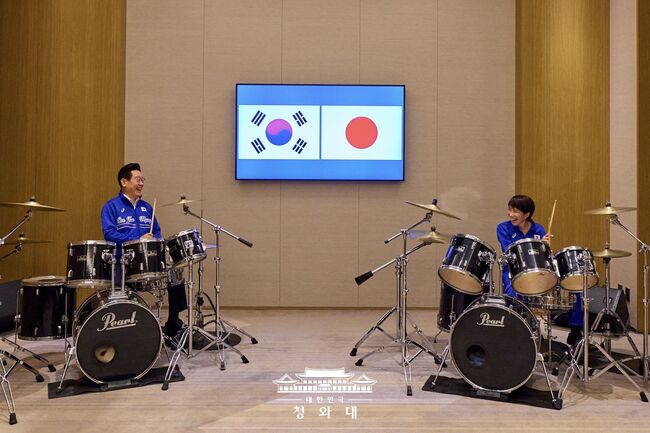 한일 정상회담 및 주요 성과 관련 대국민보고
 혐오하지 않을 용기
 목록
목록