미국의 대표적인 비영리 싱크탱크인 카네기 국제평화재단(Carnegie Endowment for International Peace)은 25.9.11일(목), '한국 국민 316명이 겪은 미국 조지아 체포/구금 8일 간의 악몽'에 관한 보고서를 발표했다.
카네기 국제평화재단(Carnegie Endowment for International Peace)은 특정 정부나 정당의 이해관계에 얽매이지 않고 객관적이고 독립적인 시각을 유지하는 것을 중요한 원칙으로 삼고 있다. 그래서 이들의 보고서나 분석 자료는 국제 관계 전문가나 정책 입안자들에게 중요한 참고 자료로 활용된다.
아래는 보고서 전문이다.
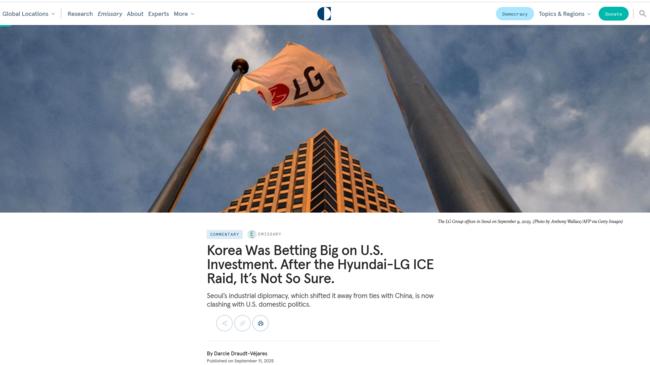 카네기 국제평화재단(Carnegie Endowment for International Peace) 보고서 (이미지=CEIP 홈페이지)
「한국, 미국 투자에 큰 기대를 걸었지만, 현대-LG ICE 단속 이후 확신을 잃다」
중국과의 관계에서 멀어져 온 한국의 산업 외교가 미국 국내 정치와 충돌하고 있다.
다시 드라우트-베하레스 (Darcie Draudt-Véjares)
2025년 9월 11일
지난주, 미국 이민세관단속국(ICE)은 조지아주 브라이언 카운티의 현대-LG 합작 배터리 공장에서 300명 이상의 한국인 노동자들을 구금했습니다. 미국 국토안보부는 이를 연방 법 집행을 위한 일상적인 작전이라고 설명했습니다. 그러나 서울에서는 수갑이 채워진 한국인들의 사진이 공개되자, 이례적으로 진영을 초월한 범국민적 공감대를 형성하며 분노를 일으켰습니다. 이번 사건은 미국의 국내적 조치들이—의도와 상관없이—핵심 동맹국, 특히 미국과 더 깊은 파트너십을 중심으로 전체 전략을 재조정해 온 국가들과 예상치 못한 외교적 마찰을 일으킬 수 있음을 보여줍니다.
군사 동맹에서 경제적 협력으로
한국의 반응을 이해하기 위해서는 지정학적 맥락이 중요합니다. 지난 10년 이상 한국은 '안미경중(安美經中)', 즉 "안보는 미국, 경제는 중국"이라는 전략을 추구했습니다. 이는 미국과의 안보 동맹을 유지하면서도, 중국의 경제 성장과 보완적인 경제 기반을 활용하는 실용적인 접근법으로 여겨졌습니다. 그러나 2000년대 이후 민주당과 공화당 정권 모두 워싱턴에서는 한국의 이러한 접근이 72년간 지속된 동맹에 잠재적인 부담이 될 수 있다고 비판적으로 봤습니다.
이러한 인식의 차이는, 양대 강대국 사이에 끼여 양쪽에 모두 경제적으로 크게 의존해야 하는 한국의 곤란한 지정학적 위치를 간과한 것입니다. 한국 정책 입안자들이 세련된 외교술이라 여겼던 것을 워싱턴은 양다리 걸치기(hedging)로 해석했습니다. 미국 관찰자들이 강요한 이분법적 선택은 한국의 복잡한 전략적 딜레마를 포착하는 데 실패했습니다.
사실, 한국은 이미 미래 경제에 대한 시각을 바꾸고 있었습니다. 중국 내에서 강화되는 정부 감독, 현지 파트너십 요구, 수익성 감소, 지식재산권 도용 우려 등으로 인해 한국 기업들은 운영에 점점 더 어려움을 느꼈습니다. 많은 한국 기업들은 이미 동남아시아와 북미로 생산 거점을 옮기기 시작했습니다. 더욱이, 중국의 경제 성장은 한국의 주요 산업 분야, 특히 첨단 기술 제조업에서 보완적 관계가 아닌 직접적인 경쟁자로 변모시켰습니다. 2017년, 서울이 북한의 미사일 방어 시스템인 사드(THAAD)를 배치하기로 동의하자, 중국은 한국 기업, 문화 수출, 관광을 겨냥한 보복성 조치로 대응했습니다.
그 이후 몇 년간, 한국의 정치 엘리트들은 진보와 보수를 막론하고 '안미경중' 전략의 지속 가능성에 의문을 제기했습니다. 심지어 한국을 역내 '균형자'로 구상했던 진보 정책 입안자들조차 이제는 한미동맹의 최우선 가치와 산업 및 투자를 미국으로 전환해야 할 필요성을 인정하고 있습니다. 현재 이재명 대통령 역시 미국에 대한 산업 투자 우선순위를 두는 실용적 필요성을 시사했습니다. 이러한 전환은 근본적인 전략적 방향 재설정을 의미합니다. 한국은 강대국 경쟁에서 한쪽을 선택했고, 미국과의 안보 및 기술적 연합을 위해 중국과의 경제적 비용을 감수했습니다.
국가 전략으로서의 투자
이러한 방향 재설정의 깊이는 외교적 수사를 넘어 막대한 비용이 드는 산업적 약속으로 이어집니다. 높은 비용 부담에도 불구하고 한국 기업들은 이제 미국에 대규모 제조 투자를 단행하고 있습니다. 중국은 평균 30%의 가격 우위를 가지며, 특정 분야에서는 최대 75%까지 가격 경쟁력을 갖습니다. 결과적으로 한국의 대미 투자는 전략적 제휴를 위해 진정한 경제적 희생을 감수하고 있음을 보여줍니다. 더 중요한 점은, 한국이 현재 자국의 경기 부진과 새로운 15%의 대미 관세에 직면한 상황에서 자국 경제가 아닌 동맹국 경제에 투자하고 있다는 것입니다.
일반적인 민간 주도 외국인 직접 투자와 달리, 한국 정부 관계자들은 대기업들과 협력하여 이러한 프로젝트를 동맹에 대한 기여이자, 미국 트럼프 대통령 행정부와의 무역 긴장을 상쇄하는 핵심 전략으로 명확히 포지셔닝했습니다. 트럼프 행정부가 7월 30일에 새로운 관세를 발표했음에도, 한국의 무역 협상가들은 이러한 투자가 미국의 제조업 경쟁력과 일자리 창출에 기여한다는 증거라고 계속 강조했습니다. 8월에 이재명 대통령이 백악관에서 트럼프를 만났을 때, 양국 정상은 '미국 조선업을 다시 위대하게(Make American Shipbuilding Great Again)'라는 이름의 1,500억 달러 규모 추가 패키지를 홍보했습니다. 이는 미국 조선소 건설과 미국인 인력 훈련을 포함하는 트럼프의 제조업 우선순위에 호소하는 것이었습니다.
현대-LG 합작 전기차 배터리 공장은 이러한 민간 투자 뒤에 있는 주목할 만한 정부의 조율 수준을 보여주는 또 다른 프로젝트입니다. 이 공장은 현대차의 거의 80억 달러에 달하는 전기차 메타플랜트와 함께 조지아주 역사상 가장 큰 산업 프로젝트의 일환이며, 8,000개 이상의 미국인 일자리를 창출할 것으로 기대됩니다. 양국 정부는 이 프로젝트를 동맹 주도 제조업 투자의 대표적인 모델로 내세웠습니다. 그러나 업계 관계자들과 현지 정부는 이러한 약속의 규모가 동시에 시스템적 문제를 드러낸다는 것을 오랫동안 인지하고 있었습니다. 현지 실업률이 2.9%에 불과하고 메트로 인구가 40만 명밖에 되지 않는 서배너(Savannah)는 이 일자리를 채우지 못할 수 있습니다. 공장 운영에 필요한 인력을 완전히 확보하려면 동부 해안과 선 벨트(Sun Belt) 전역을 아우르는 광범위한 인력 모집 노력과 포괄적인 재교육 프로그램이 필요합니다.
이러한 맥락을 고려할 때, 이러한 대표적인 프로젝트에서 벌어진 대규모 구금과 그 시각적 이미지는 양국 경제 마찰을 관리하기 위해 한국이 사용해 온 주요 외교 수단에 대한 거부이자, 성공을 위해 광범위한 전문 지식이 필요한 산업 파트너십에 대한 직접적인 위협으로 간주될 수 있습니다.
국민적 분노
체포 사태에 대한 한국 정부와 정치권의 반응은 동맹에 대한 배신감을 표출하면서도, 동시에 위기를 해결하고 산업 협력을 심화하겠다는 의지를 강조했습니다. 조현 외교부 장관은 워싱턴을 방문해 구금된 노동자들의 석방을 요청했습니다. 그는 "미국 법 집행 과정에서 한국 국민의 권리가 부당하게 침해되어서는 안 된다"는 이재명 대통령의 메시지를 강조하는 한편, LG, 현대, 삼성, SK, 한화 등 주요 한국 대기업 대표들과 협력하여 비자 문제에 대응했습니다.
한국 국내에서는 여야 의원들이 미국의 의도에 의문을 제기하며 "미국이 진정으로 한국 기업들의 투자를 유치하고 싶다면, 이런 사건이 발생해서는 안 된다"고 밝혔습니다. 이번 체포 사태는 긴급 국회 청문회를 촉발했으며, 이는 이 사건이 일반적인 정당 간 갈등을 넘어 동맹국으로부터 받은 대우에 대한 통합된 분노를 일으켰음을 보여줍니다. 이는 또한 한국 지도자들이 전략적 전환을 포기하기보다는 이 위기를 극복하려 한다는 것을 시사합니다.
한국 언론의 반응 또한 이번 사건이 얼마나 큰 모욕으로 인식되었는지를 보여줍니다. 서울에서 활동하는 언론인 라파엘 라시드(Raphael Rashid)는 사회관계망서비스(SNS)에 한국 언론의 깊이 분열된 정치 스펙트럼 전반에서 이례적으로 통일된 분노를 보인다는 글을 번역해 올렸습니다. 보수 성향의 '한국경제신문'은 ICE의 체포를 "터무니없다"고 규정하고, 이를 무역 협상 지렛대로 사용한다면 "동맹 신뢰를 배신하는 행위"가 될 것이라고 경고했습니다. 주요 보수 일간지인 '중앙일보'는 이 사건이 "확대되는 경제 동맹의 상징적인 장소"에서 발생했기 때문에 "한미동맹의 가치와 신뢰를 흔들었다"고 썼습니다. 진보 성향의 '한겨레'는 "동맹한테 이럴 수 있나?"라는 직접적인 제목을 달고, 한국인들이 "뒤통수를 맞은" 듯한 느낌을 받았다고 묘사했습니다. '서울경제신문'은 한국인 노동자들이 "전쟁 포로"처럼 취급받았다고 표현했습니다.
덧붙여, ICE가 공개한 수갑이 채워진 한국인들의 사진은 라시드가 "집단적인 굴종의 기억"이라고 지칭한 것을 촉발시켰습니다. 이는 일반적인 정책적 이견을 초월하는, 외세에 의한 굴욕에 대한 역사적 민감성을 자극했습니다. 그 결과, 경제 및 문화 강국임에도 불구하고 수갑 찬 시민들의 사진은 강대국의 행동에 여전히 취약하다는 불안감을 불러일으킵니다.
전략적 채찍질(Strategic Whiplash)
이번 사건의 타이밍은 한국의 좌절감을 더욱 가중시킵니다. 불과 일주일 전 이재명 대통령의 8월 백악관 방문은 정책적 실체는 부족했으나, 친밀감을 높이는 데 중점을 둔 중요한 동맹 관리 조치로 서울과 워싱턴에서 널리 간주되었습니다. 트럼프는 한국의 투자 약속을 명시적으로 칭찬했습니다. 중국에서 멀어져 미국과의 경제 통합을 심화하기 위해 수년간 노력해 온 한국 관리들과 산업계 지도자들에게, 그들의 핵심적인 투자 프로젝트를 겨냥한 법 집행 조치는 '전략적 채찍질(strategic whiplash, 갑작스러운 방향 전환으로 인한 충격)'을 안겨주었습니다.
한국 기업들은 이제 이 프로젝트들을 재고하고 있습니다. LG에너지솔루션은 배터리 공장 건설 작업을 일시 중단했으며, 현대, 삼성, SK, 한화 등 주요 대기업들이 미국 출장에 대한 주의 사항을 재고하고 비자 상태를 긴급하게 확인하면서 자동차, 조선, 철강, 전기 장비 분야의 최소 22개 다른 한국 공장 건설 현장이 중단되었습니다. 트럼프와 이재명 대통령이 축하했던 조선 사업 역시 잠재적으로 중단될 위기에 처했으며, 한국 정부는 노동자 비자 문제가 해결되지 않으면 지속적인 자금 협상이 한국의 약속을 무산시킬 수 있다고 경고했습니다. 업계 관계자들은 조선부터 제철소 건설에 이르기까지 수백 명의 한국인 기술 인력이 필요한 진행 중인 프로젝트들이 지연될까 우려하고 있습니다.
이러한 망설임은 워싱턴으로부터 오는 혼재된 신호에 대한 광범위한 한국의 우려를 반영합니다. 특히 ICE 사진에 대한 그들의 충격과 분노는 법적 면제보다는 존엄한 대우에 집중되었는데, 이는 그들의 전략적 기여가 그들이 기대했던 존중받는 파트너십을 보장해 주지 못할 수도 있음을 시사합니다.
동맹 관리 시사점
체포 소식이 알려진 후, 한국 외교관들은 즉시 구금된 노동자들의 석방을 요청했습니다. 구금된 한국인들을 귀국시키기 위해 전세기가 애틀랜타에 대기 중이었지만, 기사가 발행될 시점까지 석방은 지연되고 있었습니다. 한국과 미국은 한국 시설이 현지에서 충원할 수 없는 기술 인력에 대한 적절한 비자를 확보하기 위한 외교적 협상에서 진전을 보았습니다. 트럼프는 기자들에게 "여러분의 투자를 환영하며, 여러분의 매우 똑똑한 인력들을 합법적으로 데려오기를 권장합니다"라고 말하며 실질적인 어려움을 인정했습니다.
이번 한국의 반응은 미국 행정부가 일상적인 국내 법 집행이라고 인식하는 행위가 동맹국에게는 그들의 전략적 가치에 대한 국민 투표처럼 해석될 수 있음을 보여줍니다. 한국의 대미 산업 전환은 중국과의 경제적 비용과 더 깊은 동맹 통합에 회의적인 국내 유권자들의 정치적 위험을 감수하는 것이었습니다. 한국 관리들은 산업 투자를 동맹 가치의 증거로 내세웠고, 그 결과 이번 법 집행 조치는 이러한 전략적 제스처를 거부하는 것처럼 느껴졌습니다.
한국 정책 입안자들에게 이번 사건은 동맹 틀 안에서의 경제적 파트너십과 산업 협력의 지속 가능성에 대한 불편한 질문을 던지고 있습니다. 양다리 걸치기 대신 전략적 연합을 선택한 한국은, 이제 그 선택이 양국 정부가 모두 추진해 온 대규모 산업 협력에 필요한 예측 가능한 사업 환경을 제공하는지 여부에 직면하고 있습니다.
더 넓은 교훈은 한국을 넘어섭니다. 미국이 국내 제조업 역량을 재건하고 중국의 기술 발전에 맞서려 할수록, 동맹국의 산업 협력에 점점 더 의존하게 될 것입니다. 그러나 이들 정부와 기업은 자신들의 전략적 기여가 일반적인 정책 실행 과정에서 인정받고 보호받을 것이라는 확신을 가져야 합니다. 국내 법 집행과 동맹 관리 간의 인식 차이는 양 측이 심화시키고자 하는 바로 그 산업 파트너십을 훼손할 위험이 있습니다.
「Korea Was Betting Big on U.S. Investment. After the Hyundai-LG ICE Raid, It’s Not So Sure.」
Seoul’s industrial diplomacy, which shifted it away from ties with China, is now
clashing with U.S. domestic politics.
By Darcie Draudt-Véjares
Published on September 11, 2025
Last week, U.S. Immigration and Customs Enforcement (ICE) detained more than 300 Korean workers at the joint Hyundai-LG battery plant in Bryan County, Georgia, in what the Department of Homeland Security described as a routine enforcement operation of federal law. But in Seoul, the images of Korean citizens in restraints sparked a rare cross-partisan, national consensus. The incident illuminates how domestic U.S. actions—regardless of intent—can create unintended diplomatic friction with key allies, particularly those who have repositioned their entire strategic approach around deeper partnership with the United States.
From Military Alliance to Economic Alignment
Geopolitical context is crucial for understanding Korea’s reaction. For more than a decade, South Korea pursued a strategy so central that it was given a name: anmi kyeongjung, or “security with the United States, economy with China.” Seoul framed this approach as a pragmatic way to harness Beijing’s economic rise and complementary economic base while preserving security alignment with the United States. But in Washington, across both Democratic and Republican administrations since the 2000s, Seoul’s approach was scrutinized as a potential liability to the seventy-two-year-old alliance commitment.
This perception gap obscured the genuine Korean struggle with an impossible geography—caught between the world’s two superpowers with outsized economic dependence on both. What Korean policymakers saw as sophisticated statecraft, Washington interpreted as hedging. The binary choice framework imposed by American observers failed to capture the complexity of Korea’s strategic dilemma.
In fact, Seoul’s view of its economic future had already been shifting. Korean companies had been finding it increasingly difficult to operate in China due to intensifying government oversight, requirements for local partnerships, decreasing profit margins, and concerns about intellectual property theft. Many Korean firms already had begun reshoring operations into Southeast Asia and North America. Moreover, China’s economic rise had transformed it from a complementary economy to a direct competitor in key Korean industrial sectors, particularly high-tech manufacturing. A turning point occurred in 2017 when Seoul agreed to host a new U.S. missile defense system against North Korea. China responded with punishing coercive measures targeting Korean businesses, cultural exports, and tourism.
In the years since, Korean elites across the political spectrum have questioned the sustainability of anmi kyeongjung. Even progressive policymakers who broadly envisioned Korea as a regional “balancer” now acknowledge the primacy of the U.S.-ROK alliance framework and a need to shift industry and investment to the United States. Current President Lee Jae Myung has signaled the pragmatic need to prioritize industrial investment in the United States. This shift represented a fundamental strategic reorientation: Korea chose sides in great power competition, accepting economic costs with China in exchange for security and technological alignment with the United States.
Investment as Statecraft
The depth of this reorientation extends beyond diplomatic rhetoric to expensive industrial commitments. Despite steep costs, Korean companies are now making large-scale manufacturing investments in the United States. On average, China has a 30 percent average price advantage, that reaches up to 75 percent in categories where Chinese producers dominate. As a result, Korea’s U.S. investments represent genuine economic sacrifice in the name of strategic alignment. Even more crucially, Korea is investing in its ally’s economy rather than its own, at a moment when it faces sluggish economic performance and new 15 percent U.S. tariffs.
Unlike in typical private sector–led foreign direct investment, Korean government officials have worked with large conglomerates to explicitly position these projects as alliance contributions and a key strategy to offset trade tensions with the administration of U.S. President Donald Trump. Despite the tariffs the administration announced on July 30, Korean trade negotiators continued emphasizing these investments as evidence of Korea’s contribution to American manufacturing competitiveness and job creation. When Lee met with Trump in the Oval Office in August, both leaders touted an additional $150 billion package dubbed Make American Shipbuilding Great Again, an appeal to Trump’s manufacturing priorities that included building U.S. shipyards and training American personnel.
The joint Hyundai-LG electric vehicle battery plant is another such project that illustrates the notable level of government coordination behind these private investments. It operates alongside Hyundai’s nearly $8 billion electric vehicle Metaplant as part of the largest industrial project in Georgia’s history that promises more than 8,000 American jobs. Both governments have positioned this and similar projects as flagship models for alliance-driven manufacturing investment. Yet industry insiders and local governments have long been aware that the scale of this commitment also highlighted systemic challenges: With local unemployment at just 2.9 percent and a metro population of only 400,000, Savannah may be unable to fill those positions, and fully staffing the operation would require extensive recruitment efforts stretching across the East Coast and Sun Belt, as well as comprehensive retraining programs.
Given this context, the scale and visuals of detention at one of these flagship projects could be seen as a rejection of Korea’s primary diplomatic tool for managing bilateral economic frictions and a direct threat to the industrial partnerships that require extensive expertise to succeed.
A Nation’s Outrage
In response to the arrests, Korean governmental and political reactions conveyed a sense of alliance betrayal while emphasizing commitment to resolving the crisis and deepening industrial cooperation. Foreign Minister Cho Hyun traveled to Washington to secure the workers’ release. He emphasized Lee’s message that Korean nationals’ rights “should not be unjustly violated during U.S. law enforcement processes” while also coordinating with representatives from major Korean conglomerates—including LG, Hyundai, Samsung, SK, and Hanwha—to address visa challenges.
Back in Korea, lawmakers questioned American intentions, with the ruling party’s members declaring that “if the United States truly wants to attract investment from Korean companies, this kind of incident should not happen.” The arrests prompted emergency parliamentary hearings, reflecting how the event crossed typical partisan divides to create unified outrage over alliance treatment. But it also suggests Korean leaders’ determination to work through the crisis rather than abandon their strategic pivot toward the United States.
The Korean media response also reveals the depth of perceived affront. In an instructive social media post, Seoul-based journalist Raphael Rashid translated and documented the unusual consensus of outrage across the deeply divided political spectrum in Korean media. The conservative Korea Economic Daily called the ICE arrests “absurd” and warned it would be “behavior betraying alliance trust” if used as trade leverage. Major conservative daily JoongAng Ilbo wrote the incident "shook the values and trust of the ROK-US alliance” especially since it happened at “the symbolic site of an [expanding] economic alliance.” The progressive Hankyoreh was even more direct, with the headline “Is this what you do to an ally?” and describing Koreans as feeling “backstabbed.” Seoul Economic Daily described Korean workers being treated like “prisoners of war.”
In addition, the images of Koreans in restraints, made public by ICE, triggered what Rashid identified as “collective memories of subjugation”—historical sensitivities about foreign humiliation that transcend typical policy disagreements. As a result, the photos of its handcuffed citizens evoke anxieties about remaining vulnerable to the actions of larger powers, despite its status as an economic and cultural powerhouse.
Strategic Whiplash
The timing compounds Korean frustration. Lee’s August White House visit just a week prior was widely seen in Seoul and Washington as an important step in alliance management—though light on policy substance, it was heavy on rapport-building, with Trump explicitly praising Korean investment commitments. For Korean officials and industrial leaders who had spent years repositioning away from China and toward deeper U.S. economic integration, enforcement actions targeting their flagship investment projects created strategic whiplash.
Korean companies are now reconsidering these projects. LG Energy Solution paused construction work at the battery plant, while at least twenty-two other Korean factory sites across automotive, shipbuilding, steel, and electrical equipment sectors have been halted, as major conglomerates grapple with precautions about U.S. travel and urgently verify visa statuses. The shipbuilding initiative that Trump and Lee celebrated also faces potential stalling, with Seoul warning that ongoing funding negotiations could derail Korea’s commitments without resolution of the worker visa issues. Industry insiders worry about delays to ongoing projects requiring hundreds of Korean technical personnel, from shipbuilding to steel mill construction.
This hesitation reflects broader Korean concerns about mixed signals from Washington. Their shock and opprobrium, particularly on the ICE images, centered on dignified treatment rather than legal exemptions, suggesting their strategic contributions might not ensure the respectful partnership they had anticipated.
Alliance Management Implications
After news of the arrests broke, Korean diplomats promptly sought the release of the detained workers. A Korean Air flight chartered to bring the detained Koreans home remains grounded in Atlanta awaiting the workers’ release, which has been delayed as of publication. Seoul and Washington have made potential progress on diplomatic talks about securing appropriate visas for technical personnel that Korean facilities cannot source locally. Trump acknowledged the practical challenges, telling reporters: “Your investments are welcome, and we encourage you to legally bring your very smart people.”
The Korean reaction illustrates how what the U.S. administration perceives as routine domestic enforcement can be interpreted by allies as a referendum on their strategic value. Korea’s industrial pivot toward the United States involved accepting economic costs with China and domestic political risks from constituencies skeptical of deeper alliance integration. Korean officials positioned industrial investment as proof of alliance value, making enforcement actions feel like rejection of that strategic gesture.
For Korean policymakers, the incident raises uncomfortable questions about the sustainability of economic partnership and industrial cooperation within the alliance framework. Having opted for strategic alignment over hedging, Korea now confronts whether that choice provides the predictable business environment necessary for the large-scale industrial cooperation both governments have promoted.
The broader lesson extends beyond Korea. As the United States seeks to rebuild domestic manufacturing capacity and counter China’s technological advancement, it increasingly relies on allied industrial cooperation. But these governments and businesses need confidence that their strategic contributions will be recognized and protected within normal policy implementation. Perception gaps between domestic enforcement and alliance management risk undermining the very industrial partnerships both sides seek to deepen.




 한국 주식을 언제든/어디서든/믿고/편리하게 살 수 있게 시간/공간/불신/불편 장벽 해소
 현대자동차그룹 '2026 CES 선언'의 의미
 21세기 천상열차분야지도, 스피어엑스 우주 지도
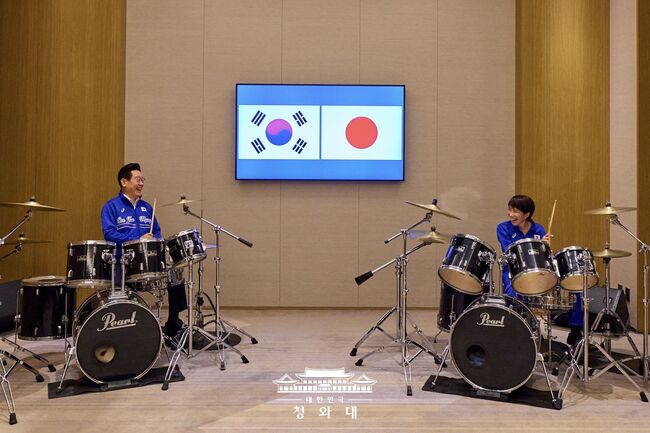 한일 정상회담 및 주요 성과 관련 대국민보고
 혐오하지 않을 용기
 목록
목록