미국의 타임(Time)에서 취임 100일을 맞은 대한민국 이재명 대통령 인터뷰를 보도했다.
타임(Time)은 미국에서 발행되는 세계적인 뉴스 잡지로, 1923년 창간하여 현재까지 약 100년 가까이 역사를 이어오고 있다. 정치적 스펙트럼은 중도 성향으로, 진보와 보수 양측의 논쟁을 균형 있게 다뤄 다양한 관점과 깊이 있는 저널리즘을 추구한다.
아래는 보도자료 전문이다.
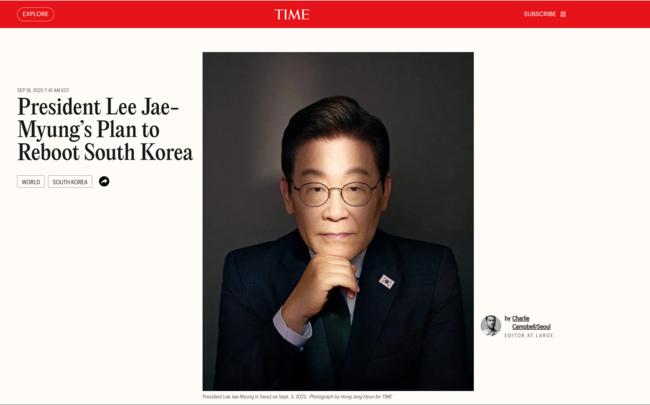 Time지 보도 (이미지=TIme 홈페이지)
「이재명 대통령, '새로운 대한민국'의 시동을 걸다」
2025년 9월 18일
찰리 캠벨(Charlie Campbell)
대통령 취임 첫날, 혼돈 속에서 시작하다
이재명 대통령은 자신의 취임 첫날이 이렇게 혼란스러울 거라고는 상상하지 못했습니다. 6월 3일 대한민국 대통령으로 당선된 후, 다음 날 아침 서울 중심부에 위치한 새 집무실에 도착한 그의 참모진은 쓰레기가 나뒹굴고 컴퓨터는 모두 구석에 쌓여 있는 등 엉망진창인 사무실을 발견했습니다. 문을 열거나 기본적인 문구용품을 찾는 것조차 쉽지 않았습니다.
이 대통령(61)은 취임 후 유일하게 서구 언론과 가진 인터뷰에서 "매우 바쁘고 혼란스러운 시기였다"며 "사전에 많은 준비를 했다고 생각했지만 충분하지 않았다"고 말했습니다.
이러한 혼란은 불명예스럽게 퇴임한 윤석열 전 대통령 때문이었습니다. 윤 전 대통령이 12월에 계엄령을 선포하면서 5천만 명의 인구를 가진 대한민국은 6개월간의 정치적 혼란을 겪었고, 결국 윤 전 대통령의 탄핵과 함께 이 대통령이 조기 대선에서 당선되었습니다.
취임 100일, 눈부신 속도로 개혁을 추진하다
취임 100일이 조금 지난 지금, 이 대통령은 첫날의 혼란이 아득한 기억처럼 느껴질 만큼 빠른 속도로 국정을 운영하고 있습니다. 세계에서 가장 인구밀도가 높은 도시 중 하나인 서울에서는 과열된 주택 시장을 안정시키기 위해 주택 담보 대출 한도를 6억 원(43만 달러)으로 제한했습니다. 또한, 새로운 노동법은 파업 노동자에 대한 법적 책임을 완화했고, 지역 경제 활성화를 위해 소득에 따라 110달러에서 330달러에 이르는 약 100억 달러 규모의 현금 바우처를 모든 국민에게 지급했습니다.
이 대통령은 "가장 큰 성과 중 하나는 대한민국 국내 정치 상황이 안정되었다는 점"이라고 말했습니다.
대외적 도전과 트럼프 행정부와의 협상
국내에서의 활발한 활동에도 불구하고, 이 대통령의 가장 큰 도전 과제는 대외적인 것이었습니다. 윤 전 대통령의 계엄령 선포로 인해 한국은 트럼프 행정부와의 새로운 무역 협상에서 다른 국가들보다 반년이나 뒤처지게 되었습니다. 2012년부터 미국과 자유무역협정을 맺어온 한국은 지난해 미국에 347억 4천만 달러어치의 자동차를 수출했는데, 이는 한국 자동차 수출의 약 절반을 차지하는 금액이었습니다. 하지만 트럼프 행정부가 25%의 관세를 부과하면서 이 수치는 급락했습니다.
7월 31일, 이 대통령은 미국에 3,500억 달러를 투자하겠다는 약속 등 여러 양보를 통해 관세를 15%로 낮추는 데 성공했습니다.
이는 침체된 경제에 활력을 불어넣으려는 이 대통령의 계획에 있어 중요한 이정표였습니다. 삼성, 현대, LG와 같은 세계적인 기업들의 본고장인 한국은 수십 년간 기술 선두를 달려왔지만, 최근 몇 년 동안은 경직된 규제 환경, 인구 문제, 그리고 중국과의 치열한 경쟁으로 인해 어려움을 겪어왔습니다. 몇 년간의 꾸준한 하락세 끝에 2024년 한국의 GDP 성장률은 2%에 불과했는데, 이는 아시아·태평양 지역 평균의 절반에도 못 미치는 수치였습니다.
인공지능(AI) 강국으로의 도약
과학기술 분야 예산을 거의 20% 증액한 이 대통령은 '초혁신 경제'를 만들어 상황을 반전시키고자 합니다. 그는 앞으로 5년간 715억 달러를 투자해 한국을 전 세계 3대 AI 강국으로 만들겠다고 밝혔습니다. 지난 7월에는 테슬라가 삼성의 텍사스 신규 반도체 공장에서 AI 칩을 생산하기 위해 165억 달러 규모의 계약을 체결하기도 했습니다.
지정학적으로 이 대통령은 한국을 동양과 서양을 잇는 '가교' 역할로 자리매김하기를 원합니다. 전통적으로 이 대통령이 속한 진보 진영인 민주당은 중국에 더 가깝고, 식민 지배국이었던 일본에 적대적이며, 미국과는 거리를 두는 경향이 있었습니다. 그러나 이 대통령은 도쿄를 첫 해외 방문지로 삼아 워싱턴으로 향하며 일본 총리와 17년 만에 처음으로 공동 성명을 발표하고 '파트너'로서 협력할 것을 다짐했습니다.
한국의 현실과 이재명 대통령의 비전
이 대통령의 이러한 행동들은 한국을 재건하기 위한 노력입니다. 서구에서는 한국을 최첨단 기술과 K팝, K-드라마 같은 문화 현상으로 인식할지 모르지만, 사실 한국은 선진국 중 최저 출산율, 최고 자살률, 최고 청년 실업률이라는 심각한 문제에 직면해 있습니다. 이 대통령은 이러한 현실을 명확히 인식하고 있습니다. 그는 "한국은 매우 심각한 위기에 처해 있다"며 "이러한 문제를 해결하기 위해 경제를 다시 성장 궤도에 올려놓고 국민들에게 더 많은 기회를 제공해야 한다"고 말했습니다.
그는 한국의 번영을 확보하고 핵심 공급망에서 한국의 역할을 강화하는 것이 곧 역내 안보에도 도움이 될 것이라고 주장합니다. 한국은 오는 10월, 20년 만에 아시아태평양경제협력체(APEC) 정상회의를 개최하며, 이 대통령은 미국과 중국 정상이 모두 참석할 이 행사가 한국이 아시아 정상회의에 다시 복귀하는 계기가 될 수 있기를 희망하고 있습니다.
험난한 외교의 길
하지만 난관은 쉽지 않습니다. 이 대통령이 타임지와 인터뷰를 하던 바로 그날, 불과 600마일(약 965km) 떨어진 베이징에서는 시진핑 중국 국가 주석이 블라디미르 푸틴 러시아 대통령과 김정은 북한 국무위원장을 맞아 제2차 세계대전 종전 80주년을 기념했습니다. 이란, 벨라루스, 미얀마 등 다른 국가 정상들도 참석했는데, 서구 언론은 이들을 '격변의 축(axis of upheaval)'이라고 부르며 미국 주도의 질서에 대한 명확한 거부 의사를 보여주었습니다. 이 대통령은 "중국이 나도 참석하기를 원했던 것 같지만, 더 이상 묻지는 않았다"고 웃으며 말했습니다.
이러한 배경 속에서 일각에서는 이 대통령이 역사적 동맹국인 미국에 지나치게 기울고 있다고 비판합니다. 그러나 한편으로는 미국이 여전히 신뢰할 만한 파트너인지에 대한 의문도 제기되고 있습니다. 특히 9월 4일 ICE(미국 이민세관집행국) 요원들이 조지아주에 있는 현대자동차-LG 합작 전기차 배터리 공장에서 한국인 근로자 300여 명을 체포하면서 이 대통령의 외교부는 "우려와 유감"을 표명했습니다.
가교로서의 한국, 미중 관계 사이에서 균형을 잡다
이 대통령은 한국이 백악관과의 관계를 공고히 함으로써 역내에서 '교류와 협력의 가교' 역할을 충분히 할 수 있다고 강조합니다. 그는 "우리는 새로운 글로벌 질서와 미국 중심의 공급망에서 미국과 함께할 것이지만, 중국과의 관계도 그들을 적대시하지 않도록 관리해야 할 필요가 있다"고 말했습니다. 그렇지 않으면 "한국이 두 진영 간의 싸움의 최전선이 될 위험이 있다"고 인정했습니다.
이 대통령은 도전에 익숙한 사람입니다. 가난한 농부의 일곱 자녀 중 다섯째로 태어난 그는 매일 두 시간씩 걸어 초등학교에 다녔고, 집에 돌아와서는 밭을 갈았습니다. 13살에 학교를 그만두고 나이를 속여 공장에 취직했지만, 악덕 업주들은 임금을 제대로 주지 않았습니다. 한 공장에서는 프레스 기계에 손목이 끼이는 사고로 인해 그는 장애 판정을 받았습니다. 끊임없는 고통에 시달리던 어린 이재명은 한때 자살을 시도하기도 했습니다. 인생의 밑바닥에서 한 나라의 최고 지도자가 된 비결을 묻자, 그는 "죽기가 힘들었고, 죽을 수 없다면 더 잘 살아봐야겠다는 생각이 들었다"며 겸연쩍게 웃었습니다.
재기의 드라마 : 빈곤을 딛고 최고의 자리까지
한국전쟁 이후 세계에서 가장 가난한 나라 중 하나에서 2020년 세계 9위 경제 대국(현재는 13위)으로 성장한 한국처럼, 이 대통령의 인생도 극적인 반전을 맞았습니다. 정규 중등 교육을 받지 못했음에도 불구하고, 그는 로스쿨에 합격했고 졸업 직후 사법시험에 합격했습니다. 인권 및 노동 관련 사건에 몰두하다가 정치에 입문하여 성남시장, 경기도지사를 거쳤습니다. 2022년 대선에 출마했으나 윤 전 대통령에게 0.7% 차이로 아쉽게 패배했습니다.
마침내 대통령이 되었지만, 그는 경기 침체라는 역풍에 직면했습니다. 더딘 성장과 함께 지난 1년간 한국의 국가 부채는 9,300억 달러로 급증했으며, 이는 한국을 AI 초강대국으로 만들려는 그의 야심에 의문을 제기하게 합니다. 내년 예산에는 AI 전용 프로세서인 GPU 15만 대 구입 비용이 포함되어 있지만, 이미 현재의 전력 수요를 충당하기에도 버거운 한국의 낡은 전력망이 그의 야심을 감당할 수 있을지는 미지수입니다.
이 대통령은 논란이 많은 측근들을 사면하고, 2016년 개성공단 폐쇄에 대해 공식적으로 사과하면서 비판을 자초하기도 했습니다. 당시 박근혜 대통령은 북한의 4차 핵실험에 대응해 공단 가동을 중단했지만, 이 대통령의 성명은 북한의 책임을 명시적으로 면제해 주면서 보수 진영으로부터 김정은 정권에 대한 굴종이라는 비판을 받았습니다.
이러한 여러 요인들이 복합적으로 작용하면서 이 대통령의 지지율은 7월 말 63%에서 8월 중순 51%로 하락했습니다. 하지만 트럼프 대통령과의 성공적인 만남과 협상이 지지율을 다시 이전 최고치로 끌어올렸습니다.
트럼프와의 '외교'와 노벨 평화상
한국 정상은 능숙하게 협상에 임했습니다. 8월 25일 백악관에 도착한 그는 트럼프의 키에 맞춰 특별 제작하고 이름이 새겨진 골프 퍼터, 'Make America Great Again' 문구가 새겨진 카우보이 모자 두 개, 그리고 한국의 조선 기술을 상징하는 거북선 모형을 선물했습니다. 트럼프가 이 대통령의 펜을 마음에 들어 하자, 그것도 스스럼없이 건넸습니다.
칭찬도 아끼지 않았습니다. 그는 타임지 인터뷰에서 "유럽, 아시아, 아프리카, 중동에서 벌어지는 많은 전쟁들이 대통령이 하고 있는 역할 덕분에 평화를 찾아가고 있다"고 극찬했습니다.
트럼프가 회담 몇 시간 전 자신의 소셜 미디어인 '트루스 소셜'에 윤 전 대통령에 대한 수사를 언급하며 "한국에서 무슨 일이 벌어지고 있는가?"라며 '숙청 또는 혁명'을 암시하는 글을 올렸기 때문에 회담 전에는 긴장감이 감돌았습니다. 이 대통령의 팀은 우크라이나의 볼로디미르 젤렌스키나 남아프리카 공화국의 시릴 라마포사가 당했던 것과 같은 기습 공격을 받을까 우려했습니다. 하지만 결국 회담은 화기애애하게 마무리되었고, 트럼프는 이 대통령을 "아주 좋은 사람"이라고 칭찬했습니다. 물론 칭찬 외에도 이 대통령이 3,500억 달러 외에 1,500억 달러의 추가 미국 투자를 약속하는 등 '현금'을 가져온 것도 도움이 되었습니다. 여기에는 대한항공이 보잉 항공기를 500억 달러어치 구매하는 계획도 포함되어 있습니다.
하지만 이면에는 이 대통령이 미국 투자를 위해 조성한 3,500억 달러 펀드에 대한 까다로운 질문들이 있었습니다. 투자 손실을 누가 떠안을 것인지에 대한 미국의 요구가 너무나 엄격해서 "만약 내가 동의하면 탄핵당할 것"이라고 이 대통령은 말했습니다. "그래서 미국 협상팀에 합리적인 대안을 요구했다"고 그는 덧붙였습니다.
북한 문제 : 노벨 평화상이라는 '환상'을 활용하다
이런 이견 때문에 이 대통령이 트럼프의 과거 대북 외교 성공을 치켜세우며 북한과의 재협상을 촉구하는 데 집중한 것은 당연한 일인지 모릅니다. 트럼프는 1950~53년 한국전쟁 이후 한반도를 갈라놓은 비무장지대에서 김정은 위원장과 세 차례 만났습니다. 그러나 2019년 하노이 정상회담에서 두 정상은 조기 퇴장하며 서로에게 회담 결렬의 책임을 돌렸습니다.
이 대통령에게 북한과의 관계 개선은 위험이 따르는 일입니다. 그의 전임자인 문재인 대통령은 북한에 대한 양보에 지나치게 몰두하는 것처럼 비쳐 국민적 반감을 샀습니다. 그러나 김정은과의 '외교 드라마'를 다시 시작하는 것은 트럼프 대통령에게 흥미로운 일입니다. 트럼프는 기자들에게 "올해 안에 그(김정은)를 만나고 싶다"고 말했습니다. 홋카이도 대학의 나오미 치 교수는 "이 대통령은 아마도 무역 및 투자 문제에서 트럼프의 관심을 돌리기 위해 북한 문제를 꺼냈을 것"이라고 분석했습니다.
트럼프가 노벨 평화상을 열망한다는 것은 공공연한 비밀입니다. 지금까지 이스라엘, 파키스탄, 캄보디아 등이 그를 후보로 지명했습니다. 이 대통령은 트럼프를 자기편으로 유지하기 위해 이 '환상'을 이용할 수 있습니다. 이는 또한 북한의 주요 후원국인 중국과 협력해야 하는 외교적 압박이기도 하며, 세계 2대 경제 대국 간의 긴장을 완화하고 이 대통령의 '가교' 역할을 통해 한국의 글로벌 위상을 높일 수 있습니다. 북한과의 관계 개선에 대한 공로로 트럼프를 노벨 평화상 후보로 지명할 의향이 있느냐는 질문에 이 대통령은 "이 문제에 대해 구체적인 진전이 있다면 그 상을 받을 자격이 있는 다른 사람은 없다"고 답했습니다.
문제는 '진전'을 어떻게 정의하느냐입니다. 리비아의 무아마르 카다피와 이라크의 사담 후세인 모두 무기 프로그램을 포기한 후 전복된 운명을 보았기에, 김정은 위원장이 핵 억지력을 포기할 것이라고 믿는 사람은 거의 없습니다. 서울에 거주하는 탈북자 김철민 씨(가명)는 "미국이 바랄 수 있는 최선은 비핵화가 아닌 핵무기 회담"이라며 "핵무기 부분적 폐기에 대한 대가로 모든 제재 해제를 요구할 것"이라고 말했습니다.
하지만 서울과 평양 간의 경제 협력을 사실상 불가능하게 만든 2017년 유엔 제재 체제를 되돌리는 것은 매우 논쟁적일 것입니다. 그럼에도 불구하고, 군비 통제에 초점을 맞추는 것은 타당합니다. 북한은 최소 50개의 핵폭탄을 보유하고 있으며, 매년 10~20개를 추가 생산할 수 있는 능력이 있는 것으로 추정됩니다. 이 대통령은 북한이 1994년 중유와 경수로를 받는 대가로 핵 프로그램을 동결하기로 합의했던 사례(이 협상은 2003년 무산됨)를 지적합니다. 그는 북한에 대한 '제재의 부분적 완화 또는 해제'를 대가로 군비 중단, 감축, 최종적으로는 비핵화라는 3단계 과정을 제안하고 있습니다. 그는 "트럼프 대통령도 같은 생각을 하고 있을 것이라고 믿는다"고 말했습니다.
물론 모든 거래는 북한이 협상 테이블에 앉을 의향이 있느냐에 달려 있습니다. 하지만 현재 북한 정권은 푸틴의 우크라이나 전쟁을 돕기 위해 무기를 팔아 약 200억 달러를 벌어들인 것으로 추정되며, 이 대통령의 유화적인 조치들은 조롱 섞인 반박만 받아왔습니다. 지난해 김정은 위원장은 통일의 문을 상징적으로 파괴했으며, 그의 영향력 있는 동생 김여정은 이 대통령의 남북 신뢰 회복 발언을 "멋진 헛된 꿈"이라고 일축했습니다.
결국 실패조차도 목적이 될 수 있습니다. 트럼프의 이전 대북 외교는 객관적으로는 실패했지만, 성공이 기사, 속보, 깨진 의전으로 평가되는 전직 리얼리티 TV 스타의 마음속에서는 아마 실패가 아니었을 것입니다. 우리는 아첨이 곧 전략이 되는 시대에 살고 있습니다. 이 대통령이 트럼프에게 그가 갈망하는 무대를 제공하는 것은, 역경을 이겨내는 법을 누구보다 잘 아는 지도자의 영리한 '주의 분산 외교'일 수 있습니다.
"한국 국민에게는 불굴의 의지가 있습니다,"라고 이 대통령은 말합니다. "제 인생의 궤적도 이와 비슷합니다. 우리 앞에 많은 어려움이 있겠지만, 우리는 극복할 수 있다고 믿습니다."
스티븐 김(Stephen Kim) 기자 / 공동 취재
「President Lee Jae-Myung’s Plan to Reboot South Korea」
Sep 18, 2025 7:41 AM KST
by Charlie Campbell
It was not how Lee Jae-myung envisioned his first day on the job. Following his election as South Korea’s President on June 3, Lee’s staff arrived at their new offices in central Seoul the next morning to find rooms strewn with trash and desks equipped with monitors but bereft of computers, which had all been piled in a corner. It was a struggle to get doors unlocked and find even basic stationery.
“It was a very busy and chaotic period,” Lee, 61, tells TIME in his only Western media interview since taking office. “I thought that we had done much preparation in advance, but it was not sufficient.”
Behind the chaos was his disgraced predecessor, Yoon Suk-yeol, whose December declaration of martial law plunged the East Asian nation of 50 million into six months of political paralysis that concluded with Yoon’s impeachment—and, after a snap poll, Lee’s election.
Just over 100 days on, the new leader has moved with such speed that the chaos he encountered on his first day seems like a distant memory. In Seoul, one of the world’s most densely populated cities, he has imposed a 600 million won ($430,000) cap on mortgage loans for property purchases to quell an overheated housing market. A new labor law, meanwhile, has reduced legal liabilities for striking workers, and some $10 billion of cash vouchers ranging from $110 to $330 have been distributed to every citizen, depending on income, to boost local businesses.
“One of my biggest accomplishments is that South Korea’s domestic political situation has been stabilized,” he says.
For all the action at home, perhaps his greatest challenge was external: the turbulence caused by Yoon’s martial law declaration meant that South Korea languished half a year behind other nations in negotiating a new trade deal with the Trump Administration. Seoul and Washington have had a free-trade agreement since 2012, and last year South Korea sent cars worth $34.74 billion to the U.S.—accounting for about half of the Asian nation’s auto exports, a figure that plummeted when the Trump Administration imposed levies of 25%. On July 31, Lee negotiated a reduction to 15% in exchange for pledges to invest $350 billion in the U.S. and other concessions.
It was a critical milestone—and one that is central to Lee’s plan to reenergize a moribund economy. The home of world-leading firms such as Samsung, Hyundai, and LG spent decades at technology’s vanguard, but fortunes have wilted in recent years because of a stifling regulatory environment, demographic pressures, and fierce competition from China. After years of steady decline, South Korea’s GDP grew by only 2% in 2024, less than half the Asia-Pacific average.
Lee, who has hiked spending on science and technology by almost 20%, wants to turn things around by creating a “super innovation economy.” His government, he says, will invest $71.5 billion over the next five years to transform South Korea into one of the top three AI nations worldwide. And in July, Tesla inked a $16.5 billion deal to produce AI chips at Samsung’s new semiconductor foundry in Texas.
Geopolitically, Lee wants to position South Korea as a “bridge” between East and West. Leaders of Lee’s progressive Democratic Party have traditionally been closer to China, hostile toward former colonizer Japan, and kept the U.S. at arm’s length. Lee, however, pointedly made Tokyo his first foreign visit en route to Washington and pledged to work “as partners” with Japan’s Prime Minister in the neighbors’ first joint statement in 17 years.
Lee’s actions are meant to reboot South Korea. The West may think of his nation in terms of space-age technology and zeitgeist-defining cultural phenomena like KPop Demon Hunters, though in truth South Korea battles the lowest birth rate, top suicide rate, and highest youth unemployment of any developed nation. Lee is clear-eyed about the stakes. South Korea is in “a very serious crisis,” he says. “To address these issues, we need to bring our economy back on track for growth and increase opportunities for our people.”
His pitch is that securing South Korean prosperity and boosting its role in sensitive supply chains can help regional security too. In October, South Korea hosts the Asia-Pacific Economic Cooperation for the first time in 20 years, and Lee hopes the event—due to be attended by the leaders of both the U.S. and China—can catalyze his nation’s return to Asia’s top table.
However, threading the needle will not be easy. On the same day Lee sat down with TIME in Seoul, less than 600 miles away Chinese President Xi Jinping welcomed Russia’s Vladimir Putin and North Korea’s Kim Jong Un to Beijing to commemorate 80 years since the end of World War II. Other dignitaries included the leaders of Iran, Belarus, and Myanmar—a motley cohort dubbed the “axis of upheaval” by the Western press—in a clear rebuke to the U.S.-led order. “I think China wanted me to attend, but I didn’t ask further,” laughs Lee.
Against this backdrop, critics say Lee may be tilting too close to historic ally the U.S. But there are also questions whether Washington remains a reliable partner, not least since the arrest by ICE officials of over 300 South Korean workers at a Hyundai Motor–LG car-battery factory in Georgia on Sept. 4, which prompted Lee’s Foreign Ministry to express “concern and regret.”
Lee, however, insists South Korea remains well-placed to act as a “bridge of exchanges and cooperation” in the region by cementing ties with the White House. “We will stand together with the U.S. in the new global order, as well as supply chains centered on the U.S., but there is a need for us to manage our relationship with China so as not to antagonize them.” Otherwise, Lee concedes, there’s “a risk that South Korea could become the front line of a battle between two different blocs.”
Lee is no stranger to a challenge. Born the fifth of seven children in a poor farming family in South Korea’s rural east, he would trudge daily for two hours each way to elementary school before returning home to plow fields. Lee quit school at 13 and lied about his age to work in factories, where shady bosses would often withhold workers’ wages. At one job, Lee’s wrist was crushed in a pressing machine, an injury that left him officially designated as disabled. In constant pain, the young Lee even attempted suicide. Asked about his ascent from that nadir to his nation’s top job, Lee breaks into a bashful grin: “It was hard to die, and if I can’t die, why not live better?”
Much like his nation, rising from among the world’s poorest following the Korean War to ninth biggest economy in 2020 (it is 13th today), Lee’s life was poised for a remarkable turnaround. Despite no formal secondary education, he was accepted to law school and passed the national bar exam immediately after graduation. Following a period immersed in human- and labor-rights cases, he entered politics, serving first as Seongnam city mayor, and then later as governor of Gyeonggi province. He ran for President in 2022—but lost to Yoon by 0.7%.
Now finally in office, he faces economic headwinds. Alongside lackluster growth, South Korea’s national debt has surged to $930 billion over the past year, raising questions about his ambitions to transform his nation into an AI superpower. Next year’s budget includes funding for 150,000 GPUs, or processors specialized for AI. But it isn’t even clear that South Korea’s creaking electricity grid, which is struggling to meet the country’s current needs, can keep up with Lee’s ambitions.
Lee has also courted criticism for pardoning controversial allies, and over a formal apology for the 2016 shutdown of the Kaesong Industrial Complex—where South Korean factories could access North Korean labor by the shared border. Though South Korea’s then President Park Geun-hye halted operations in response to North Korea’s fourth nuclear test, the new statement explicitly absolves Pyongyang of any responsibility, and has been framed by conservatives as kowtowing to the Kim regime.
A combination of these and other factors led Lee’s approval rating to fall from 63% in late July to 51% in mid-August. It has since rebounded to its previous high. The trigger? Lee’s successful courtship of—and negotiation with—Donald Trump.
The South Korean leader played his hand deftly, arriving at the White House on Aug. 25 with a golf putter customized for Trump’s stature and engraved with his name, two cowboy hats emblazoned with make america great again, as well as a foot-long model of an ironclad turtle ship to symbolize Korea’s shipbuilding traditions. When the U.S. Commander in Chief took a liking to Lee’s pen, that was proffered too.
Then there were the compliments: about the Oval Office’s gaudy new decor, a surging stock market, Trump’s diplomatic prowess. “Many wars in Europe, in Asia, in Africa, and in the Middle East are coming to peace because of the role that you are playing,” Lee gushed.
There had been a sense of trepidation going into the meeting, with Trump posting on Truth Social just hours earlier: “WHAT IS GOING ON IN SOUTH KOREA?” and hinting at a “Purge or Revolution,” in reference to investigations into ex-President Yoon. Lee’s team feared they might be walking into the kind of ambush sprung on Ukraine’s Volodymyr Zelensky or South Africa’s Cyril Ramaphosa. In the end, things were cordial, with Trump praising Lee as “a very good guy.” It helped, of course, that other than encomiums Lee brought hard cash—half a trillion dollars of it. Aside from the $350 billion already agreed to, Lee unveiled an additional $150 billion of investments in the U.S., including Korean Air Lines’ buying $50 billion in Boeing.
But behind the scenes Lee faced tough questions about the $350 billion investment fund he had put together for the U.S. Would it be all cash? And who would swallow any losses from the investments? The U.S. demands were so strict that “if I were to agree then I would be impeached!” says Lee. “So I asked the U.S. negotiating team for a reasonable alternative.”
With no agreement on these issues, it was perhaps unsurprising that Lee focused on praising Trump for his prior diplomatic success with Kim Jong Un, while urging him to re-engage with Pyongyang. Trump met three times with North Korea’s leader, including at the demilitarized zone that has split the peninsula since the 1950–53 Korean War. However, his budding bromance with Kim exploded dramatically at a summit in Hanoi in 2019, when both leaders left early while blaming each other for the failure to build on an earlier consensus on “denuclearization” achieved at a prior summit in Singapore.
For Lee, pushing for South Korean engagement is not without risk. Public opinion turned against his Democratic Party predecessor Moon Jae-in precisely because he appeared preoccupied with concessions to their Stalinist neighbors. Yet rekindling diplomacy’s greatest soap opera with Kim is something that does interest the U.S. President, who told reporters “I’d like to meet him this year.” And indulging Trump on Kim could help Lee downplay bugbears with Seoul. “Lee probably brought up North Korea to take Trump’s attention away from the trade and investment issues,” says Naomi Chi, a professor at Hokkaido University.
Trump’s yearning after a Nobel Peace Prize is no secret—Israel, Pakistan, and Cambodia have nominated him so far—and Lee may use that chimera to keep Trump onside. It’s also a diplomatic push that would necessitate engaging Pyongyang’s chief sponsor Beijing, possibly lowering the temperature between the world’s top two economies and elevating South Korea’s global standing as Lee’s “bridge.” Asked whether he would nominate Trump for a Nobel Peace Prize for rapprochement with the North, Lee replied that “if there is concrete progress on this issue ... there is no other person who would deserve that prize.”
The problem is defining progress. Few believe Kim would countenance relinquishing his nuclear deterrence, given the fates of Libyan leader Colonel Muammar Gaddafi and Iraq’s Saddam Hussein, both toppled after abandoning their weapons programs. “The best the U.S. could hope for is nuclear arms talks, not denuclearization,” says Kim Chol-min, a Seoul-based North Korean defector who used to handle the leadership’s secret funds and uses a pseudonym for security. “All sanctions lifted in return for partial destruction of nuclear weapons.”
But rolling back the strict U.N. sanctions regime imposed in 2017, which has rendered economic cooperation between Seoul and Pyongyang virtually impossible, would be hugely controversial. Still, a focus on arms control makes sense. North Korea is estimated to wield at least 50 nuclear bombs and may have the capacity to produce 10 to 20 annually. Lee points out how North Korea agreed in 1994 to freeze its nuclear program in exchange for heavy oil and light water reactors. (The deal collapsed in 2003.) He advocates “negotiations to partially ease or lift sanctions” on North Korea in exchange for a three-stage process: arms suspension, reduction, and finally denuclearization. “And I believe that President Trump would be on the same page.”
Of course, any deal depends on North Korea’s willingness to sit down. But today the regime is flush with an estimated $20 billion reaped from arms sales to aid Putin’s war in Ukraine, and Lee’s conciliatory measures have been met with scornful ripostes. Last year, Kim symbolically demolished the Arch of Reunification in Pyongyang while his influential sister Kim Yo Jong dismissed Lee’s remarks about restoring inter-Korea trust as “a fancy and pipe dream.”
In the end, even failure may serve a purpose. While Trump’s previous North Korea engagement flopped by any objective measure, it probably didn’t in the mind of the former reality-TV star, for whom success is measured in column inches, breaking-news alerts, and shattered protocol. We live at a moment when flattery is strategy, and Lee’s providing Trump the stage he craves may be a canny act of distraction diplomacy from a leader who knows more than most about beating the odds.
“Korean people have an indomitable will,” says Lee. “My life trajectory has similarities. Although there are many difficulties in front of us, I believe that we will be able to prevail.” —With reporting by Stephen Kim/Seoul




 한국 주식을 언제든/어디서든/믿고/편리하게 살 수 있게 시간/공간/불신/불편 장벽 해소
 현대자동차그룹 '2026 CES 선언'의 의미
 21세기 천상열차분야지도, 스피어엑스 우주 지도
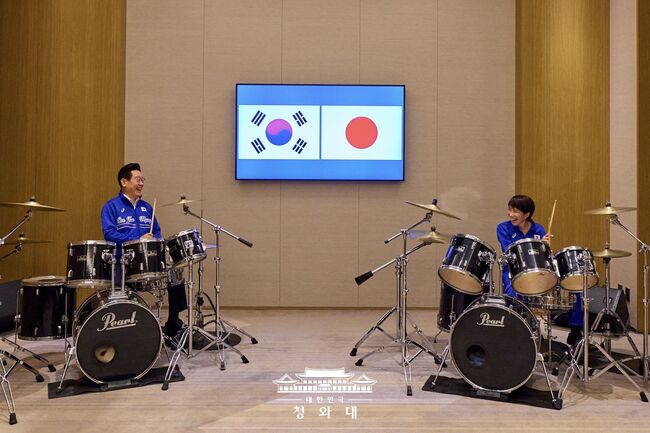 한일 정상회담 및 주요 성과 관련 대국민보고
 혐오하지 않을 용기
 목록
목록